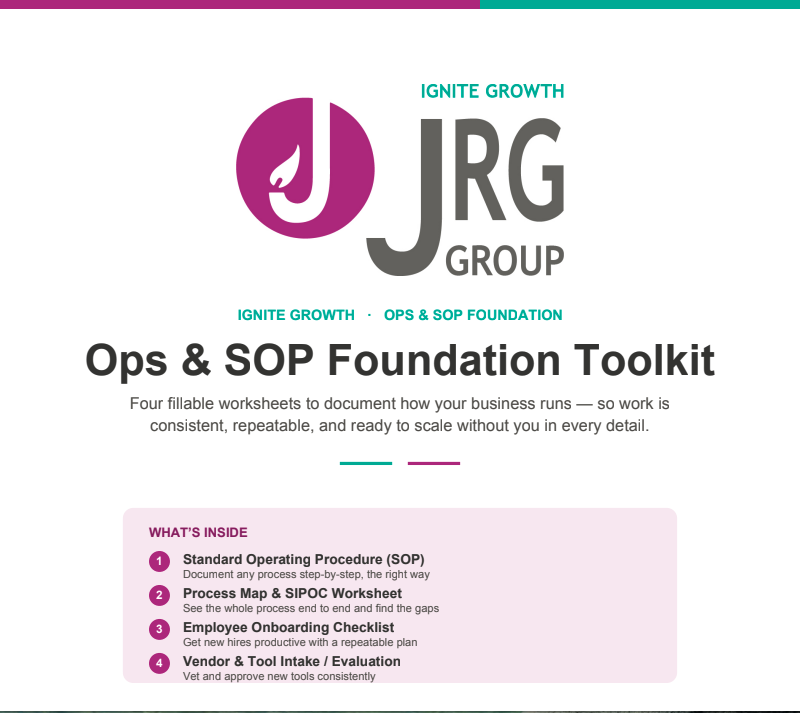
 Image 1 of 2
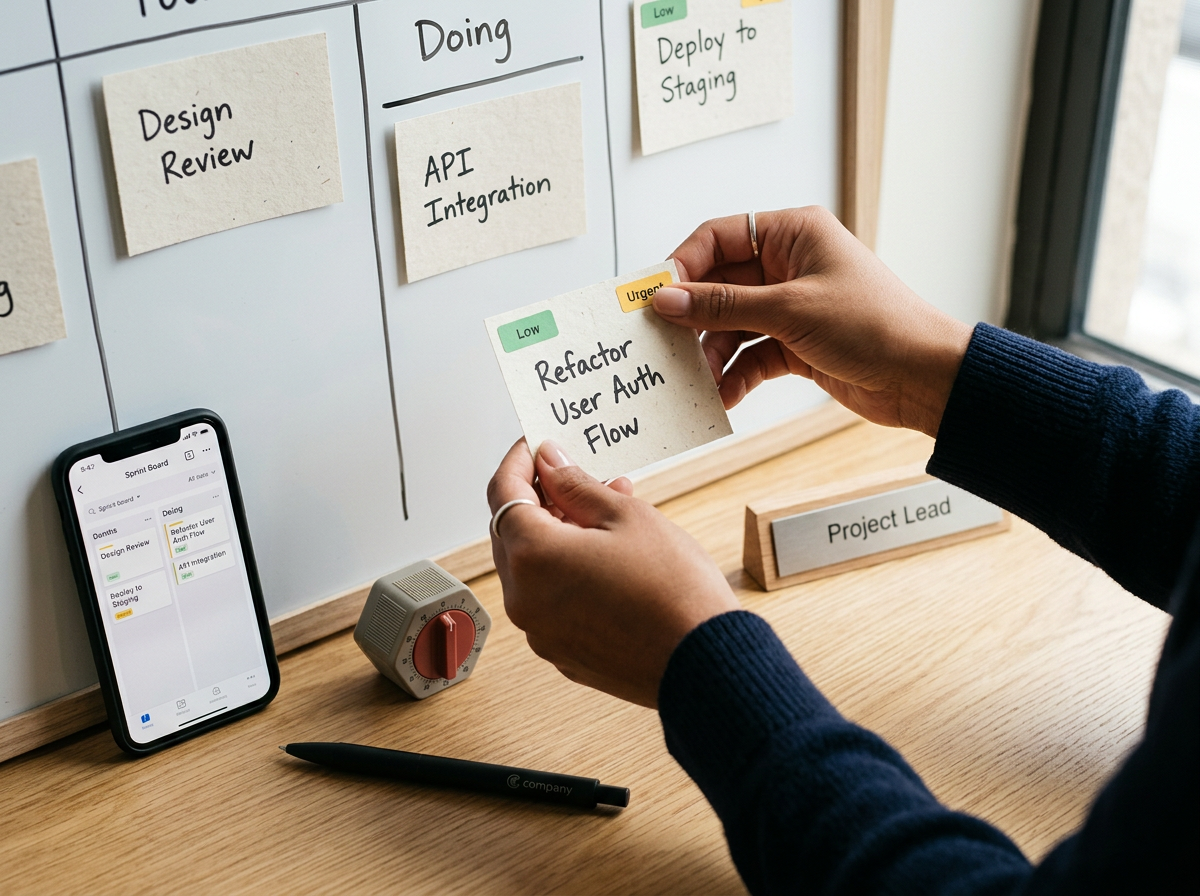
 Image 2 of 2
For teams ready to systematize how they run
Assessment of core processes, tools & bottlenecks
Rapid diagnostic workshop: 2–3 hour facilitated session with key stakeholders to surface how work actually flows, not how it’s supposed to.
Process inventory: catalog of current processes, owners, inputs/outputs, SLAs, and tooling touchpoints.
Bottleneck analysis: identify recurring delays, rework loops, handoff failures, and single points of failure using data and stakeholder interviews.
Tool alignment review: evaluate each SaaS/tool for fit, overlap, licensing inefficiencies, and integration gaps.
Maturity scoring: score processes across repeatability, documentation, tooling, metrics, and governance to prioritize where systematization will deliver the most impact.
Deliverables:
Executive summary of findings and top 5 high-impact problem areas
Visual process snapshots for the most critical workflows
Tool map showing redundancies and integration opportunities
Quick wins list (1–3 week fixes) and risks to address first
Prioritized SOP library & process maps
SOP design blueprint: standardized template for SOPs (purpose, scope, owner, steps, inputs/outputs, KPIs, escalation, versioning).
Prioritization framework: rank SOP candidates by frequency, risk, compliance need, and automation-readiness.
Rapid SOP builds: produce prioritized SOPs with step-by-step instructions, decision trees, role RACI, and embedded templates/checklists.
Process mapping: detailed swimlane and value-stream maps for priority processes, plus simplified one-page playbooks for frontline use.
Knowledge transfer pack: training slides, short how-to videos (scripted), and quiz/checklist for competency validation.
Deliverables:
Library of X prioritized SOPs (customizable for team size and complexity)
High-resolution process maps and one-page playbooks
Owner roster and review cadence for SOP governance
Onboarding checklist to fold SOPs into new hire ramp
Automation & systemization roadmap
Automation readiness assessment: score processes by rule-based consistency, data availability, transaction volume, and exception rate.
Systemization opportunities: target automations (RPA, workflow automation, native SaaS automations, or API-based integrations) and process redesigns to maximize ROI.
Integration strategy: recommended integrations, middleware choices, and data model touchpoints to reduce manual handoffs.
Phased roadmap: prioritized initiatives across three horizons—Quick Wins (0–3 months), Medium Projects (3–9 months), Strategic Platform Changes (9–18 months).
Cost/benefit and effort estimates: estimated effort, expected time savings, error reduction, and projected ROI per initiative.
Governance & change plan: rollout approach, stakeholder owners, monitoring KPIs, and a playbook for continuous improvement.
Deliverables:
Detailed automation roadmap with milestones, owners, and success metrics
Proof-of-concept scope for first automation (if desired)
Implementation checklist and risk mitigation plan
KPI dashboard template to track throughput, cycle time, and error rates post-automation
Why this works
Focused on what teams actually do, not theoretical ideal processes.
Balances quick operational wins with longer-term platform thinking.
Delivers repeatable assets (SOPs, maps, roadmaps) that scale as the org grows.
Next steps
Kickoff: schedule the diagnostic workshop and stakeholder interviews.
Snapshot delivery: 2-week turnaround for assessment findings and quick-win list.
Roadmap & SOP build: prioritized SOP library and the automation roadmap delivered in subsequent 4–8 weeks, depending on scope.
We’ll bring the templates, caffeine-fueled curiosity, and a little healthy process obsession to get you from chaos to systematized.
For teams ready to systematize how they run
Assessment of core processes, tools & bottlenecks
Rapid diagnostic workshop: 2–3 hour facilitated session with key stakeholders to surface how work actually flows, not how it’s supposed to.
Process inventory: catalog of current processes, owners, inputs/outputs, SLAs, and tooling touchpoints.
Bottleneck analysis: identify recurring delays, rework loops, handoff failures, and single points of failure using data and stakeholder interviews.
Tool alignment review: evaluate each SaaS/tool for fit, overlap, licensing inefficiencies, and integration gaps.
Maturity scoring: score processes across repeatability, documentation, tooling, metrics, and governance to prioritize where systematization will deliver the most impact.
Deliverables:
Executive summary of findings and top 5 high-impact problem areas
Visual process snapshots for the most critical workflows
Tool map showing redundancies and integration opportunities
Quick wins list (1–3 week fixes) and risks to address first
Prioritized SOP library & process maps
SOP design blueprint: standardized template for SOPs (purpose, scope, owner, steps, inputs/outputs, KPIs, escalation, versioning).
Prioritization framework: rank SOP candidates by frequency, risk, compliance need, and automation-readiness.
Rapid SOP builds: produce prioritized SOPs with step-by-step instructions, decision trees, role RACI, and embedded templates/checklists.
Process mapping: detailed swimlane and value-stream maps for priority processes, plus simplified one-page playbooks for frontline use.
Knowledge transfer pack: training slides, short how-to videos (scripted), and quiz/checklist for competency validation.
Deliverables:
Library of X prioritized SOPs (customizable for team size and complexity)
High-resolution process maps and one-page playbooks
Owner roster and review cadence for SOP governance
Onboarding checklist to fold SOPs into new hire ramp
Automation & systemization roadmap
Automation readiness assessment: score processes by rule-based consistency, data availability, transaction volume, and exception rate.
Systemization opportunities: target automations (RPA, workflow automation, native SaaS automations, or API-based integrations) and process redesigns to maximize ROI.
Integration strategy: recommended integrations, middleware choices, and data model touchpoints to reduce manual handoffs.
Phased roadmap: prioritized initiatives across three horizons—Quick Wins (0–3 months), Medium Projects (3–9 months), Strategic Platform Changes (9–18 months).
Cost/benefit and effort estimates: estimated effort, expected time savings, error reduction, and projected ROI per initiative.
Governance & change plan: rollout approach, stakeholder owners, monitoring KPIs, and a playbook for continuous improvement.
Deliverables:
Detailed automation roadmap with milestones, owners, and success metrics
Proof-of-concept scope for first automation (if desired)
Implementation checklist and risk mitigation plan
KPI dashboard template to track throughput, cycle time, and error rates post-automation
Why this works
Focused on what teams actually do, not theoretical ideal processes.
Balances quick operational wins with longer-term platform thinking.
Delivers repeatable assets (SOPs, maps, roadmaps) that scale as the org grows.
Next steps
Kickoff: schedule the diagnostic workshop and stakeholder interviews.
Snapshot delivery: 2-week turnaround for assessment findings and quick-win list.
Roadmap & SOP build: prioritized SOP library and the automation roadmap delivered in subsequent 4–8 weeks, depending on scope.
We’ll bring the templates, caffeine-fueled curiosity, and a little healthy process obsession to get you from chaos to systematized.